Best Migraine Tracking Apps Compared: Features, Cost, and Accuracy
Last updated: August 11, 2026
- If you want to compare sleep, food, weather, and meds across 90 days, a dedicated app is usually better.
- Migraine tracking works best when you log attacks within minutes, not days; fast entry usually beats perfect detail.
- Trying to find the best migraine tracking app?
- Quick picks Tool Best for Free tier?
Some links here are partner links. It costs you nothing and may pay us a commission.
Quick answer: Migraine Buddy is the strongest single pick for most people in this migraine tracking apps compared: features, cost, accuracy roundup — though the better choice still depends on how much detail you want to record and how often you will actually open it.
- Migraine Buddy, N1-Headache, Bearable, Zamplo, and mySymptoms all offer some level of free access, but paid features vary by plan and platform.
- Migraine tracking works best when you log attacks within minutes, not days; fast entry usually beats perfect detail.
- A headache diary cannot diagnose migraine. New headaches are not something to guess at; if they are worsening or come with weakness, talk to a clinician and seek urgent care for red flags.
- Reports are only useful if you can export them. Before paying, check whether the app can share dates, symptoms, medication use, and notes in a readable format.
- The best migraine tracking apps compared here are useful because they turn symptoms into patterns you can bring to a doctor, not because they replace medical advice.
Trying to find the best migraine tracking app? Start here: which one will help you spot triggers, show your doctor something readable, and not irritate you into quitting after two weeks? That’s the real test. And it is a pretty harsh one.
I write about health software for a living, and I judge migraine trackers by one thing first: can they turn messy day-to-day symptoms into something you can use? For migraine tracking apps compared: features, cost, accuracy, that usually means a solid symptom diary, quick logging, exportable reports, and reminders that feel helpful rather than bossy.
Quick picks
| Tool | Best for | Free tier? | Starts at | Where to start |
|---|---|---|---|---|
| Migraine Buddy | Most people who want the deepest migraine-specific tracking | Yes | Varies by plan at the time of writing | Start with the free app and compare paid plans if you need more analytics |
| N1-Headache | People who want structured trigger analysis and a more clinical workflow | Limited/varies | Varies by plan at the time of writing | See current plans and look for the analytics tier |
| Bearable | People tracking migraine alongside sleep, mood, meds, and other conditions | Yes | Varies by plan at the time of writing | Start free if you want broader health tracking |
| Zamplo | People who want simple logging plus shareable summaries | Yes/limited | Varies by plan at the time of writing | Try the free tier and check what reporting is locked |
| mySymptoms | People who mainly care about diet, symptoms, and trigger correlation | Usually trial/varies | Varies by plan at the time of writing | Check current plans and confirm export options |
| Apple Health / Google Fit plus notes | People who want a basic, low-friction record without paying for a dedicated app | Yes | Free | Use built-in health logging if you only need a light diary |
How I compared them
These apps were judged as migraine trackers, not generic wellness tools. Quick entry during a headache mattered. So did recurring symptom patterns, medication logs, trigger tracking, export quality, and how much effort it takes to generate a report a neurologist would actually read.
I also checked the practical stuff that gets glossed over in reviews: how much useful functionality is hidden behind a paywall, whether the app handles more than one condition, and what happens if you quit later and want your history back. No lab testing here. No ownership stake either. Just product behavior, published features, and widely reported user experience.
For a health topic like this, one point needs to be blunt: an app does not diagnose migraine, and it does not replace medical care. New headaches, worsening pain, one-sided weakness, or a pattern that is clearly different from usual? Talk to a clinician. The American Migraine Foundation and the NHS both stress that headache diaries can support care, but they are not a diagnosis on their own.
Migraine tracking apps compared
Which migraine tracking app is best overall?

Among migraine tracking apps for most people, Migraine Buddy is the one I would start with.
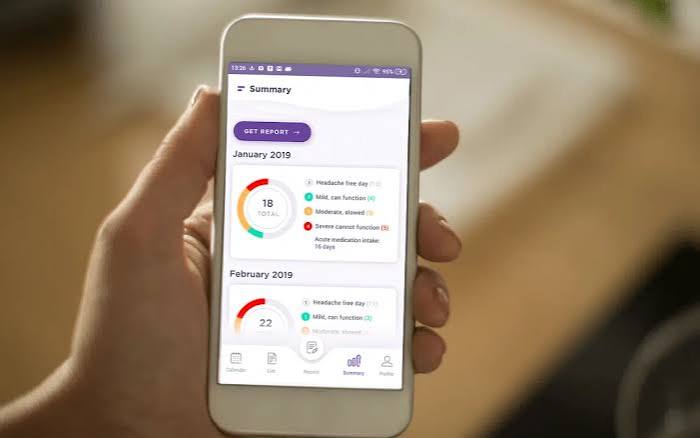
Built around migraine first, it is not tacked on as an afterthought inside a general symptom tool. That matters because the questions are specific: when did the attack begin, how long did it last, what did you take, did it help, and what was going on before it started? Migraine Buddy does a strong job of collecting that history without making you build your own system. Clean enough. That counts.
Who it is for
People who want a dedicated migraine diary with enough detail to help identify patterns and bring clean data to an appointment.
Who should skip it
Skip it if you want a broad chronic-illness tracker for many conditions, or if you know you will not keep up with frequent prompts.
Pros
- Built for migraine, so the fields and reports feel relevant instead of generic.
- Good for capturing attacks, medication use, duration, and possible triggers.
- Helpful when you need to show a timeline rather than just recall “I get headaches sometimes.”
- Widely available across major mobile platforms, and there is more than one place to subscribe or compare plans, including the brand’s own site and common app stores.
Cons
- The free tier is useful, but the app reserves some of the better analysis and reporting for paid plans.
- The interface can feel dense if you only want a very light diary.
- If you stop logging consistently, the value drops fast; this is not a passive app.
Pricing reality
At the time of writing, Migraine Buddy has a free tier, but the practical upgrade point is usually reporting and deeper insight tools. That is the line that matters. If all you need is a basic log of attacks and meds, the free tier may be enough. If you want better trend analysis or more polished exports, you are likely to hit the paid wall.
For a team of five? That question does not really apply here because this is mostly a personal-health app, not a seat-based team product. The real cost question is whether the paid features are useful enough to justify a recurring subscription for one person.
The lock-in question
Here I would be cautious. Like most health trackers, you should assume the app is most useful while your history stays inside it. Before you commit, check whether you can export your logs in a format your doctor can use. If you leave later, what usually breaks is not the raw data itself but the convenience: polished charts, filters, and built-in summaries disappear.
CTA
Start the free trial or free tier first, then see current plans if you outgrow the basic diary.
Best for structured analysis: N1-Headache
N1-Headache is the app I would look at if my main goal were to test trigger theories instead of just keeping a diary.
Structure is its strength. It suits people who want to record headaches in a disciplined way and compare episodes over time. That makes it appealing if you are working with a specialist, trying to isolate a medication pattern, or tired of vague notes like “bad headache after work.” Honestly, the vague-note phase gets old fast.
Who it is for
People who want a more analytical approach and are willing to spend a little more time entering data to get cleaner pattern recognition.
Who should skip it
Skip it if you want the fastest possible tap-and-go logging or if you know you will not keep up with detailed entries.
Pros
- More analysis-oriented than a simple symptom diary.
- Good fit when you are trying to identify repeatable patterns.
- Better than many generic health apps for turning logs into something you can review later.
Cons
- The structured workflow can feel like homework on a bad headache day.
- It is less friendly for casual users who just want “headache happened, took medicine, moved on.”
- Some of the value depends on your willingness to log consistently and accurately.
Pricing reality
At the time of writing, the free tier or trial version is usually enough to learn the workflow, but the analysis features are the reason most people would pay. If the app is priced per person and you are only using it for yourself, the math is straightforward: pay only if the reports actually replace the notes you would otherwise build by hand.
For a group of five, the cost question only matters if you are paying for multiple family members or multiple patients. In that case, the per-user cost can add up quickly, and you should compare it against a simpler app plus a shared export routine.
The lock-in question
If you leave, the risk is losing the structured history that made the app useful in the first place. I would check export formats before entering months of data. If exports are clumsy, moving away later means rebuilding your timeline somewhere else, and that is exactly the kind of task people do not finish.
CTA
See current plans and confirm the export format before you commit.
Best for all-around health tracking: Bearable
Bearable is the one I would pick if migraine is only part of a bigger picture.
A lot of migraine tracking is really about the boring overlap: sleep, stress, caffeine, meals, hydration, mood, cycle timing, exercise, and meds. Bearable helps because it handles that broader mix better than a migraine-only app. That makes it a good fit if you want to understand whether your headaches are tied to other daily health patterns. Some days, the culprit is not dramatic at all — just a pile of ordinary things.
Who it is for
People tracking migraine alongside sleep, mental health, fatigue, digestion, or other chronic symptoms.
Who should skip it
Skip it if you want a migraine-first tool with highly specialized headache reports. Also skip it if you only want to log one symptom and never think about the rest.
Pros
- Flexible enough to track migraine in the context of the rest of your body.
- Strong choice if your triggers are spread across several categories instead of one obvious cause.
- Useful for people who already journal or track health habits and want one place to put it all.
Cons
- General-purpose tools can feel less focused when you are in the middle of a migraine and want one quick screen.
- Too many tracking options can become busy fast.
- The best experience usually depends on how much time you are willing to spend setting it up.
Pricing reality
Bearable’s free tier is usually enough to prove whether the format works for you. The paid plan is generally what unlocks more serious customization and longer-range analysis. That matters if you are trying to connect migraine with sleep or mood patterns over weeks, not just days.
For a five-person household or team, I would not buy it as a shared system. It is more of a personal tracker than a collaborative one, so the cost scales with people, not with value.
The lock-in question
You should assume you can export some data, but the harder part is preserving the meaning of that data. If you move away, the app’s custom categories, tags, and setup rules may not survive in another product. That is a common migration problem with flexible trackers.
CTA
Start free, use it for a couple of weeks, and see current plans only if the cross-symptom view is actually helping.
Best for simple reports: Zamplo
Zamplo is the app I would consider if my main need were to track headaches and hand someone a readable summary later.
It sits in a middle ground: less specialized than Migraine Buddy, less sprawling than a full wellness log, and often easier to explain to another person. Handy, really. That is useful if you want a clean record for a doctor, caregiver, or family member without building a complicated system.
Who it is for
People who want straightforward logging and a shareable overview more than deep trigger modeling.
Who should skip it
Skip it if you want advanced analytics or if you need the app to infer patterns for you.
Pros
- Easier to use than the most detail-heavy migraine apps.
- Better suited to people who want summaries they can share.
- Good balance between a diary and a report.
Cons
- It may feel too light for people who want serious pattern analysis.
- The most helpful reporting can sit behind the paid tier.
- If you want lots of condition-specific migraine fields, you may find it too generic.
Pricing reality
At the time of writing, Zamplo appears more useful than flashy on the free side, but the paid plan is where reporting and broader features tend to matter. The key question is whether you need just logging or a repeatable summary you can bring to appointments.
For five users, this is another personal-use product rather than a true team tool, so the cost grows with each account.
The lock-in question
Before you invest time, confirm what export options you get and whether you can pull out notes, dates, and symptom history in a format that does not require manual cleanup. If you leave later, the biggest loss is usually the clean timeline, not the raw entries.
CTA
Try the free tier first, then see current plans if sharing summaries is a priority.
Best for food and trigger correlation: mySymptoms
mySymptoms makes the most sense if you suspect food, routine, or lifestyle triggers are part of your migraine pattern.
That sounds obvious, but many migraine apps treat diet as one tiny checkbox. The American Migraine Foundation notes that food triggers are individual and not universal, so this kind of logging is most useful when you pair it with a clinician’s advice and your own pattern review. mySymptoms focuses more tightly on the relationship between what you consume or do and how you feel afterward. If you notice headaches after skipped meals, certain drinks, or irregular days, this sort of app can pull those clues into view.
Who it is for
People who want to compare symptoms against meals, habits, and recurring exposures.
Who should skip it
Skip it if you want the fastest migraine-only diary or if you do not want to spend time entering food or lifestyle details.
Pros
- Helpful for connecting symptom timing to food and daily routines.
- Good if your suspected triggers are mostly behavioral.
- Can support a more detective-style approach to migraine management.
Cons
- Food and symptom logging can become tedious.
- Correlation is not causation, and the app cannot tell you whether a trigger is real.
- If you do not log carefully, the output gets noisy fast.
Pricing reality
At the time of writing, the app is usually available with some kind of trial or limited access, and the paid version is where the useful long-term tracking lives. If you only care about migraine, the extra detail may feel excessive. If you care about what you ate, when you slept, and when the headache started, it can be worth it.
For five people, I would not treat it as a shared household subscription unless everyone is genuinely committed to logging.
The lock-in question
The important question is whether you can export your entries cleanly enough to inspect outside the app. If you stop using it, you keep the raw history only if you have a usable export. If not, you lose the event-to-event comparisons that made the app helpful in the first place.
CTA
Start with the free trial or limited tier, then see current plans if food-pattern tracking is the reason you are here.
Best free option: Apple Health or Google Fit plus notes
If you want the lowest-friction option, Apple Health or Google Fit plus notes is the simplest place to start.
This is not a deep migraine-specific product. It is a practical option for people who just want to record dates, symptoms, medication use, and a few triggers without paying for a dedicated app. That can be enough if your goal is to bring a clean summary to an appointment rather than build a long-term analysis system.
Who it is for
People who want a basic diary, already use the built-in health tools on their phone, or do not want to commit to a subscription.
Who should skip it
Skip it if you need advanced trigger analysis, migraine-specific reports, or structured exports made for a clinician.
Pros
- Free.
- Low friction if you already use the platform.
- Good for light tracking and quick notes.
Cons
- Not built for migraine-specific analysis.
- You may need to create your own system for symptoms and triggers.
- Reporting is usually basic.
Pricing reality
There is no subscription cost here, which is the main appeal. The trade-off is that you supply the structure yourself. If you want enough detail to explain five attacks over two months, this can work. If you want to compare sleep, food, weather, and meds across 90 days, a dedicated app is usually better.
The lock-in question
Lock-in is lower because you are often using built-in tools or plain notes, but that also means you do not get polished migraine dashboards. If you move phones or platforms, the issue is continuity, not feature loss.
CTA
Use the built-in tools first, then move to a dedicated app only if the pattern becomes hard to manage by hand.
Which app is most accurate?
Accuracy is less about whether the app “detects” migraine and more about whether it captures your day in a way that helps you and your doctor see repeat patterns.
No app can tell you with certainty that chocolate, weather, or stress caused an attack. What an app can do is preserve the sequence: slept poorly, skipped lunch, took medication, headache started, symptoms lasted six hours. That kind of record helps a clinician review possible triggers. The National Institute of Neurological Disorders and Stroke recommends tracking headache frequency, timing, and associated symptoms because that history can support diagnosis and treatment planning.
Best fit by use case
- Migraine Buddy is strongest when you want a migraine-specific diary with a lot of detail.
- N1-Headache is better if you want a more structured workflow for pattern analysis.
- Bearable is better when migraine overlaps with sleep, mood, digestion, or cycle tracking.
- Zamplo is a good middle ground for simple reports.
- mySymptoms is best when food and lifestyle triggers are the main question.
- Apple Health or Google Fit plus notes is fine if you just need a basic record.
My practical takeaway
If you want the shortest path to useful migraine tracking, start with a dedicated app and log every attack for at least 14 days. If you are after something lighter, begin with notes and your phone’s health tools; that route is cheaper —